On December 27, 2025, Anthropic’s lead engineer Boris Cherny posted on X: “In the last thirty days, 100% of my contributions to Claude Code were written by Claude Code.” 259 pull requests. 497 commits. 40,000 lines added. 1.3 million views. The tech world applauded.
Three months later, a packaging mistake exposed 512,000 lines of that code to the public. Leaks happen. Companies recover. The leak isn’t the story.
Shock! Shock! I learned yesterday that an open problem I'd been working on for several weeks had just been solved by Claude Opus 4.6 - Anthropic's hybrid reasoning model that had been released three weeks earlier! It seems that I'll have to revise my opinions about "generative AI" one of these days. What a joy it is to learn not only that my conjecture has a nice solution but also to celebrate this dramatic advance in automatic deduction and creative problem solving.
Fuck you people. Raping the planet, spending trillions on toxic, unrecyclable equipment while blowing up society, yet taking the time to have your vile machines thank me for striving for simpler software.
Just fuck you. Fuck you all.
I can't remember the last time I was this angry.
Walter Pitts rose from the streets to MIT, but couldn’t escape himself.
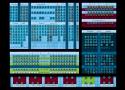
In an Industrial Technical High School in Tuscany, the last working example of the first computer produced by Olivetti with which Ettore Sottsass won his first Compasso d’Oro in 1959.
Scatterplot matrices are one of the most practical direct visualization of unstructured data sets—provided that the dimensionality does not become too large. Despite their prominence in the visualization community, there are few non-commercial tools out there that are able to produce scatterplot matrices for publication-ready visualizations.
In this post, I want to briefly explain how to use a recent version of gnuplot, one of my favourite plotting tools, to create something that resembles a scatterplot matrix. In this example, I will use “the famous Iris data set”, which I am sure everyone is familiar with by now.
For decades, software reuse was only a lofty goal. Now it's very real.

Virtually nobody is pricing in what's coming in AI. I wrote an essay series on the AGI strategic picture: from the trendiness in deep learning and counting the OOMs, to the international situation and The Project.

In 1993, Intel released the high-performance Pentium processor, the start of the long-running Pentium line. The Pentium had many improvements over the previous processor, the Intel 486, including a faster floating-point division algorithm. A year later, Professor Nicely, a number theory professor, was researching reciprocals of twin prime numbers when he noticed a problem: his Pentium sometimes generated the wrong result when performing floating-point division. Intel considered this "an extremely minor technical problem", but much to Intel's surprise, the bug became a large media story. After weeks of criticism, mockery, and bad publicity, Intel agreed to replace everyone's faulty Pentium chips, costing the company $475 million.
The hardest part of advising Ph.D. students is teaching them how to write.
Fortunately, I've seen patterns emerge over the past couple years.
So, I've decided to replace myself with a shell script.
In particular, I've created shell scripts for catching three problems:
abuse of the passive voice,
weasel words, and
lexical illusions.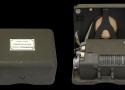
At the start of WWII, the US armed forces used various means for enciphering their confidential traffic. At the lowest level were hand ciphers. Above that were the M-94 and M-138 strip ciphers and at the top level a small number of highly advanced SIGABA cipher machines.
NIST’s second draft of its “SP 800-63-4“—its digital identify guidelines—finally contains some really good rules about passwords.
Inspired by this thread on Hacker News about the C++ diff-pdf tool I decided to see what it would take to produce a web-based PDF diff visualization tool using Claude …

A month ago Coleman Hughes, a young writer whose name I recognized from his many thoughtful essays in Quillette and elsewhere, set up a virtual "AI safety roundtable" with Eliezer Yudkowsky, Gary Marcus, and, err, yours truly, for his Conversations with Coleman podcast series. Maybe Coleman was looking for three people with the most widely…
A decision that arises over and over when designing concurrent programs is whether to represent program state in control flow or as data. This post is about what that decision means and how to approach it. Done well, taking program state stored in data and storing it instead in control flow can make programs much clearer and more maintainable than they otherwise would be.
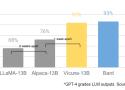
Leaked Internal Google Document Claims Open Source AI Will Outcompete Google and OpenAI

Buone intenzioni, implementazione proposta pessima.
Here is the text of the talk I gave at the Go SF meeting in June, 2012. This is a personal talk. I do not speak for anyone else on the Go...