Site Description Here

La sua é; una fotografia che prova a confrontarsi con i giganti del pensiero antico e contemporaneo. Ora vede tutto e non ha piú; bisogno di fotografare
This one is a bit roundabout but stick with me. I've exchanged a few emails with the science.org website technical support people about the RSS feed for the excellent chemistry/pharmacology blog "In the Pipeline". It's not Derek's fault at all, but his science.org/aaas hosts have basically blocked native RSS feed readers and they only allow corporate service websites that do the feed reader part for you like Feedly.org. They consider using a native application feed reader to be scraping their website and ban them.
Born in Naples in 1933, Carotenuto studied in Rome and Turin, earning a degree in philosophy. He then lived for a period in the US, where he attended the School of Experimental Psychology at the New School for Social Research in New York, where he made the acquaintance of Edward Whitmont. Upon his return to Italy, he became Professor of Psychology of the Personality in the new faculty of Psychology at Rome’s University “La Sapienza”, as well as President of the Associazione di Psicologia e Letteratura, dedicated to the study of the relationship between psychoanalysis and artistic creativity.

I wrote this piece after an early-career friend of mine asked some very good questions on how to be useful. Since this is a thing I struggle a bit with myself, I thought it worthwhile to write up my thoughts. Note that I fully understand that not everyone has the luxury to think about their career like this – you first have to take care of yourself and family before you can start fretting about if your working life is saving the world!
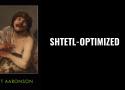
A month ago Coleman Hughes, a young writer whose name I recognized from his many thoughtful essays in Quillette and elsewhere, set up a virtual "AI safety roundtable" with Eliezer Yudkowsky, Gary Marcus, and, err, yours truly, for his Conversations with Coleman podcast series. Maybe Coleman was looking for three people with the most widely…
A decision that arises over and over when designing concurrent programs is whether to represent program state in control flow or as data. This post is about what that decision means and how to approach it. Done well, taking program state stored in data and storing it instead in control flow can make programs much clearer and more maintainable than they otherwise would be.


[...] la Cassazione ha confermato la destituzione di questa docente bollata di "inettitudine permanente e assoluta" [...]
https://attivissimo.blogspot.com/2023/05/il-decollo-di-artemis-i-quando-la.html' property='og:url'/>
<meta content='Il decollo di Artemis I: quando la pellicola è meglio del digitale' property='og:title'/>
<meta content=

Evening in the country, perhaps after skiing. A straight, warm dress of wool and rayon, its waist pulled in with a string, its skirt a new ankle length. By Joset Walker. Jewelry by Seaman Schepps Vogue November 1946 © Frances McLaughlin-Gill
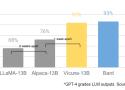
Leaked Internal Google Document Claims Open Source AI Will Outcompete Google and OpenAI
The Peter principle is a concept in management developed by Laurence J. Peter, which observes that people in a hierarchy tend to rise to "a level of respective incompetence": employees are promoted based on their success in previous jobs until they reach a level at which they are no longer competent, as skills in one job do not necessarily translate to another.

Buone intenzioni, implementazione proposta pessima.
[Warning: This might be the longest Shtetl-Optimized post of all time! But that’s OK; I expect most people will only want to read the introductory part anyway.] As I’ve mentioned before…
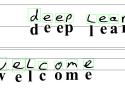
A from scratch GPU-free introduction to modern machine learning. Many tutorials exist already of course, but this one aims to really explain what is going on, from the ground up. Also, we’ll develop the demo until it is actually useful on real life data which you can supply yourself.
Other documents start out from the (very impressive) PyTorch environment, or they attempt to math it up from first principles. Trying to understand deep learning via PyTorch is like trying to learn aerodynamics from flying an Airbus A380.
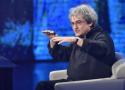
Il mondo è molto più grande del piccolo cerchio che noi chiamiamo Comunità internazionale, avverte il fisico. C’è molto di vero in questa arringa, ma anche un disastroso errore di fatto
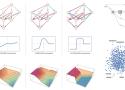
Stephen Wolfram explores the broader picture of what's going on inside ChatGPT and why it produces meaningful text. Discusses models, training neural nets, embeddings, tokens, transformers, language syntax.
Ethan Tseng, Shane Colburn, James Whitehead, Luocheng Huang, Seung-Hwan Baek, Arka Majumdar, Felix Heide Nature Communications